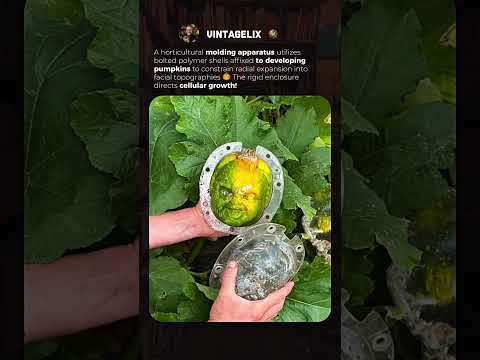
Have you ever walked through a pumpkin patch and wished for something a little more unique than the standard round gourd? Gardening enthusiasts and professional farmers alike are now turning toward innovative horticultural techniques to transform ordinary produce into living works of art. One of the most fascinating developments in this field is the specialized pumpkin cultivation apparatus, a tool that allows growers to "mold" their crops into specific shapes as they grow.
The Science of Shaped Horticulture
The process of shaping fruit isn’t exactly new, but the technology behind it has become significantly more accessible. As showcased by creators like @echo_fields on Instagram, the method involves placing a young, developing fruit into a heavy-duty mold. This pumpkin cultivation apparatus typically consists of two or more bolted polymer shells that are incredibly durable.
As the pumpkin grows, it naturally expands. When it encounters the hard walls of the polymer shell, it has no choice but to fill the available space, eventually taking on the exact contour of the mold. This results in pumpkins shaped like hearts, stars, or even intricate human faces, all without any genetic modification.
Precision Engineering for the Garden
The beauty of a modern pumpkin cultivation apparatus lies in its engineering. These molds must be strong enough to withstand the immense internal pressure exerted by a growing pumpkin, which can easily crack lower-quality plastics. By using bolted shells, gardeners ensure the mold stays secure throughout the entire growth cycle. Furthermore, the polymer material is often designed to be UV-resistant and transparent, ensuring that the fruit still receives the necessary light and temperature regulation to ripen properly and develop a vibrant color.
Tips for Successful Molding
If you are looking to experiment with this technique, timing is everything. You cannot place a full-grown pumpkin into a mold; the shell must be affixed while the fruit is still small and pliable. Once the pumpkin has filled the apparatus, it is vital to monitor it closely. Over-expansion can sometimes lead to the fruit "choking" if the mold doesn't have proper ventilation or if it is left on for too long after the fruit has reached maturity.
Whether you are looking to create high-end decor for the autumn season or simply want to push the boundaries of what your garden can produce, using a specialized molding system is a game-changer. It turns the act of farming into a blend of biology and sculpture, proving that with the right tools, nature can be shaped into almost anything we imagine.