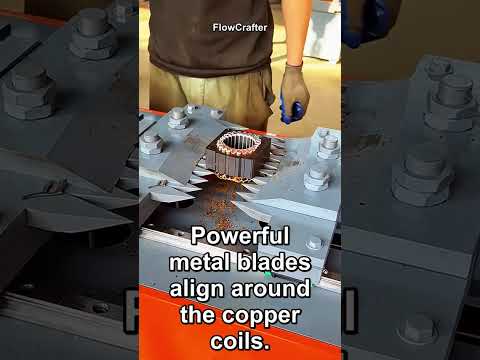
Recycling electric motors is a cornerstone of the sustainable scrap metal industry. Inside every motor lies a copper goldmine, but the challenge has always been extracting it efficiently. Traditionally, workers had to rely on manual tools and sheer physical strength, often resulting in low productivity and significant safety risks.
Today, the landscape is shifting. With the introduction of specialized motor recycling machinery, the process of stripping copper from a motor stator has become a streamlined, industrial-grade operation. As demonstrated in high-efficiency recycling environments, a single operator can now process dozens of units in the time it once took to finish just one.
How Modern Stator Stripping Works
The process begins with the preparation of the motor stator. The exterior casing is removed, exposing the tightly wound copper coils embedded within the steel core. The operator then utilizes a heavy-duty hydraulic splitter. This piece of machinery is designed to slice through the copper windings at one end with surgical precision, ensuring the wires are ready for extraction without damaging the valuable metal.
Once the coils are cut, the stator is moved to a pulling station. Using high-pressure hydraulic claws, the machine grips the bundle of copper and pulls it clean out of the steel laminations. This mechanical advantage ensures that the copper is recovered in its purest form, while the remaining steel is left free of contaminants and ready for its own recycling stream.
The Benefits of Industrial Automation
Efficiency is the primary driver behind this technological leap. Manual stripping is not only slow but also increases the risk of repetitive strain injuries for workers. By utilizing modern machinery, scrap yards and recycling centers can significantly increase their daily throughput, leading to much higher profit margins and lower labor costs.
Furthermore, the precision of these machines ensures that very little material is wasted. In an era where resource scarcity is a global concern, maximizing the recovery of non-renewable resources like copper is essential. Whether you are a small-scale recycler or a large industrial facility, upgrading your equipment is the key to staying competitive and profitable in the modern recycling market.


