Have you ever wondered how massive industrial equipment rotates effortlessly at thousands of revolutions per minute? The secret behind this incredible efficiency lies in a simple yet revolutionary mechanical component: the ball bearing. From everyday household items to heavy-duty industrial machinery, ball bearings play an indispensable role in reducing friction and supporting heavy loads.
What is a Ball Bearing and How Does It Work?
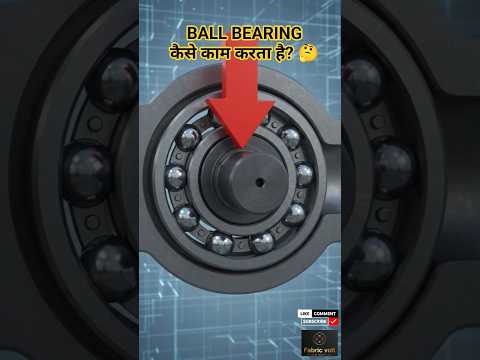
At its core, a ball bearing is a type of rolling-element bearing designed to minimize rotational friction while supporting radial and axial loads. Instead of two flat surfaces sliding directly against each other—which creates immense heat and resistance—a ball bearing utilizes smooth, precision-engineered steel balls placed between two concentric rings.
When one ring rotates, the steel balls roll along the inner track. Because rolling friction is significantly lower than sliding friction, energy loss is kept to an absolute minimum, allowing parts to move freely.
Key Components of a Ball Bearing
To understand how ball bearings help modern machinery operate reliably, it helps to look at their anatomy:
- Outer Ring: Remains stationary or mounts directly into the mechanical housing assembly.
- Inner Ring: Fits snugly onto the rotating shaft.
- Steel Balls: Act as the primary rolling elements that carry and transfer the load.
- Cage (Separator): Keeps the balls evenly spaced to prevent them from clashing and to ensure uniform load distribution.
Supporting Heavy Loads with Minimal Friction
The brilliance of a ball bearing lies in its ability to handle loads through the small contact points of the steel balls. When a physical load is applied, the force spreads across these rolling spheres, allowing the mechanism to carry substantial weight without grinding to a halt.
By preventing overheating and excessive material wear, ball bearings extend the overall lifespan of mechanical equipment and dramatically cut down on maintenance costs.
The Backbone of Modern Engineering
Without these tiny engineering marvels, high-speed rotating machinery would succumb to severe wear and tear within minutes. By turning damaging friction into effortless motion, ball bearings remain one of the most essential inventions driving industrial progress forward.