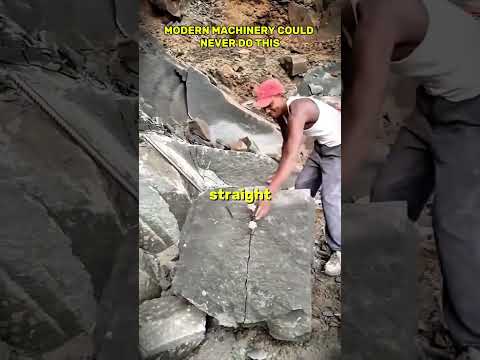
In an age where we rely on satellite-guided drills and massive diesel-powered engines, it is easy to forget that some of the world's most impressive structures were built without a single circuit board. A recent viral demonstration showcasing the art of cutting solid rock with zero power tools has left viewers stunned, proving that human ingenuity often triumphs over complex machinery.
The Physics of the Perfect Split
The technique featured is as simple as it is effective. By using a series of small metal wedges—known as "plugs and feathers"—and a hand-held sledgehammer, a craftsman can split a massive granite boulder with a line so straight it looks laser-cut. This process relies on the principle of even pressure distribution. Instead of using brute force to crush the stone, the worker taps into the natural cleavage planes of the rock, allowing physics to do the heavy lifting.
Why Ancient Methods Still Matter
We often assume that bigger is better, but the precision of these ancient techniques makes some modern heavy machinery look surprisingly clumsy. While a diamond-tipped saw might get the job done faster in a factory setting, the manual method requires no electricity, creates minimal noise pollution, and produces a finish that respects the natural integrity of the stone. It is a masterclass in efficiency that requires nothing more than a steady hand and a deep understanding of geology.
Lessons for the Modern World
Beyond the visual satisfaction of watching a giant rock snap perfectly in half, there is a deeper lesson here about sustainability and skill. In our rush to automate every industry, we risk losing the "human touch" that defines true craftsmanship. While we certainly won’t be abandoning our industrial machinery for hand tools anytime soon, observing these ancient methods serves as a powerful reminder: sometimes, the most sophisticated tool in existence is the one that has been around for thousands of years.
By looking back at how our ancestors manipulated the earth's toughest materials, we can find inspiration for a future that values precision, patience, and a more harmonious relationship with the resources around us.


