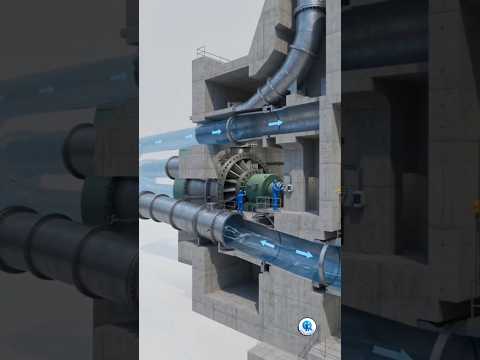
When most travelers approach the border of Nevada and Arizona, they are greeted by a monolithic wall of concrete rising from the depths of the Black Canyon. While the Hoover Dam is a visual marvel, its true secrets remain hidden beneath the surface. It is far more than just a barrier for the Colorado River; it is a living, breathing mechanical giant that operates with surgical precision.
The Powerhouse Within
Deep inside the structure lies a world most tourists never see. The dam’s primary purpose is hydroelectric power generation, facilitated by a series of massive turbines and generators. These units are the heartbeat of the facility, converting the raw energy of falling water into electricity for millions of homes across the Southwest. The scale of this machinery is staggering, with individual components weighing hundreds of tons, all working in perfect synchronization to maintain the power grid.
A Labyrinth of Tunnels and Cooling Systems
To keep the dam operational, a vast network of inspection tunnels and galleries honeycombs the interior. These passages allow engineers to access the complex cooling systems and sensors that monitor the dam's health in real-time. Interestingly, during construction, over 500 miles of cooling pipes were embedded into the concrete blocks. Without this internal cooling network, the heat generated by the chemical reaction of the setting concrete would have prevented the dam from solidifying for over 100 years. Today, this hidden infrastructure ensures the heavy machinery remains at a stable temperature, preventing structural stress and wear.
Engineering Excellence for the Modern Age
What makes the Hoover Dam truly remarkable is how it integrates 1930s rugged engineering with modern digital technology. Advanced sensors now track every vibration and shift in the Earth’s crust, feeding data back to a central control room. This blend of vintage iron and digital precision proves that the high-performance machinery of the past can be successfully adapted for the future.
The next time you look at a photo of this Art Deco masterpiece, remember that the "wall" is just the shell. Behind that concrete lies an industrial world of tunnels, turbines, and technology that continues to defy the odds nearly a century later.


