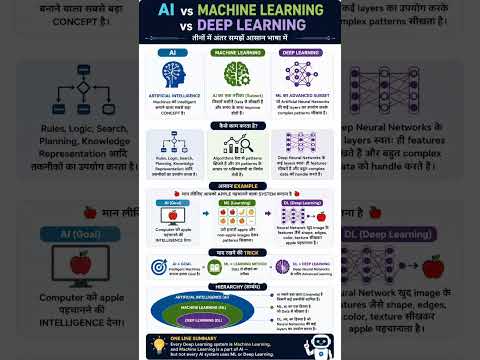
Artificial Intelligence (AI), Machine Learning (ML), and Deep Learning (DL) are three terms that dominate today’s technology conversations. While often used interchangeably, they represent distinct layers of smart technology. To understand how modern software and enterprise machinery process complex decision-making, it is essential to break down how these three concepts fit together.
What is Artificial Intelligence (AI)?
At the top level sits Artificial Intelligence. AI is a broad, overarching concept focused on creating machines or systems capable of performing tasks that typically require human intelligence. This includes everything from simple rule-based automation to advanced problem-solving, logic, and natural language processing. In short, AI is the ultimate goal: building intelligent systems that can simulate human cognitive abilities.
Machine Learning (ML): The Algorithmic Engine
If AI is the vision, Machine Learning is the method used to achieve it. Machine Learning is a specific subset of AI where systems learn and improve from data without being explicitly programmed. Instead of writing code for every specific rule, developers feed vast amounts of data into an algorithm, allowing it to identify patterns and make predictions. This algorithmic machinery drives modern recommendation engines, spam filters, and predictive maintenance tools across various tech platforms.
Deep Learning (DL): The Advanced Neural Layer
Deep Learning takes Machine Learning a step further. It is a specialized subset of ML inspired by the structure and function of the human brain. Using deep artificial neural networks with multiple layers, Deep Learning algorithms can process vast amounts of unstructured data such as images, video, and raw audio.
Deep Learning powers autonomous vehicles, advanced facial recognition, and complex large language models. The underlying computational machinery in Deep Learning requires massive datasets and high-performance hardware to process millions of parameters simultaneously.
Key Differences at a Glance
To picture their relationship simply, think of concentric circles: - Artificial Intelligence: The outer circle representing the general concept of smart, autonomous systems. - Machine Learning: The middle layer representing systems that learn automatically from data. - Deep Learning: The innermost core using multi-layered neural networks for complex pattern recognition.
Understanding these distinctions helps businesses and tech enthusiasts leverage the right digital tools effectively, paving the way for smarter automation and innovation.


