How Power Transformers Stay Cool to Keep Industrial Power Tools Running
This article provides an in-depth exploration of Power tools, covering foundational concepts, practical applications, and engineering insights.
When high-voltage electricity flows through the electrical grid to supply factories, job sites, and heavy-duty power tools, immense heat is generated inside power transformers. Internal electrical losses convert energy into thermal energy. Without effective cooling mechanisms, these massive transformers would overheat quickly, leading to equipment degradation or catastrophic failure.
Understanding Heat Generation in Transformers
Power transformers operate continuously under heavy electrical loads. As high-current electricity passes through the internal copper or aluminum windings and the magnetic core, heat naturally builds up due to electrical resistance and hysteresis losses. Keeping these transformers at optimal operating temperatures is vital for maintaining power stability across the energy grid, ensuring that continuous energy remains accessible for running everything from manufacturing machinery to high-demand power tools.
Common Transformer Cooling Methods Explained
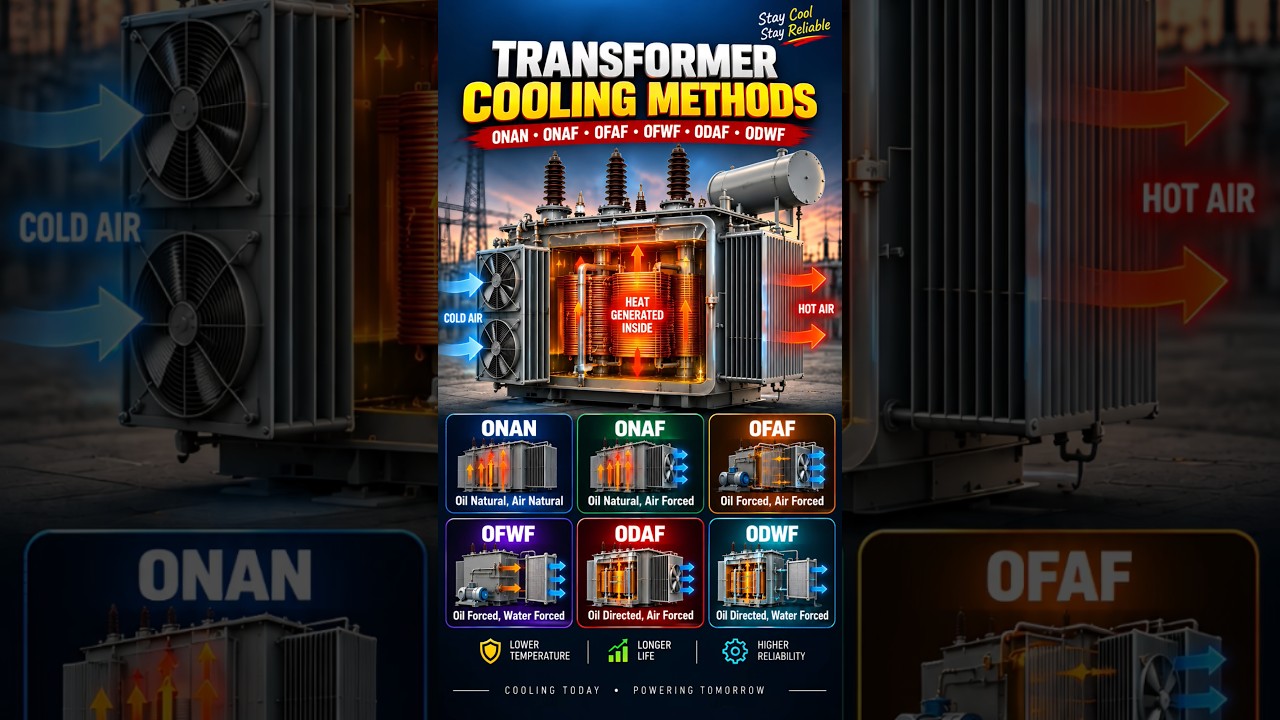
Engineers rely on specialized cooling techniques to transfer heat away from the transformer core and windings. The most common methods are categorized by how oil and air are circulated:
- ONAN (Oil Natural Air Natural): The standard cooling method where internal transformer oil circulates naturally via convection inside the tank. Heat transfers to the outer radiator fins, which are cooled naturally by ambient air.
- ONAF (Oil Natural Air Forced): Builds upon the ONAN system by adding external fans. These fans forcefully blow air across the radiator surfaces, significantly boosting heat dissipation during higher peak loads.
- OFAF (Oil Forced Air Forced): Designed for heavy industrial applications, this method uses internal pumps to actively circulate transformer oil through external heat exchangers while powerful fans force air over the cooling coils.
Why Transformer Thermal Management Matters
Proper thermal management prevents insulation breakdown, extends the lifespan of high-voltage transformers, and reduces the risk of power outages. By utilizing these advanced cooling methods, power utilities maintain grid reliability under severe load conditions, providing uninterrupted power to consumers and heavy industries alike.


