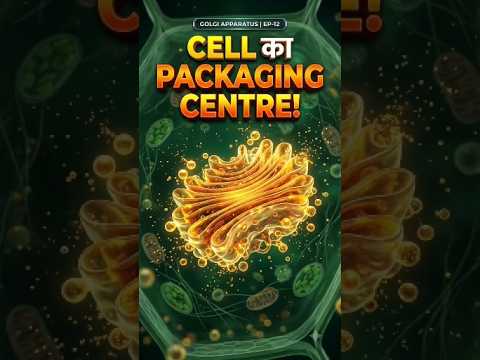
Have you ever wondered how proteins and lipids within a plant cell reach their exact destinations? Just like a modern fulfillment warehouse processes, tags, and ships thousands of orders daily, the plant cell relies on its own sophisticated system to manage cellular materials. At the heart of this logistics network is a remarkable organelle responsible for sorting and distributing molecular cargo.
What is the Golgi Apparatus?
Discovered by scientist Camillo Golgi, the Golgi apparatus serves as the primary processing and packaging hub within eukaryotic cells, including plant cells. Structurally, it consists of a series of flattened, membrane-bound sacs called cisternae, stacked neatly on top of one another.
While animal cells usually contain a few large Golgi structures, plant cells often host dozens—or even hundreds—of smaller, individual units distributed throughout the cytoplasm. This unique arrangement allows plant cells to efficiently process materials right where they are needed most.
The Cellular Packaging and Shipping Hub
The primary function of the Golgi apparatus is to modify, sort, and package proteins and lipids synthesized by the endoplasmic reticulum (ER).
Here is how the cellular assembly line operates:
- Receiving: Molecules arrive at the cis face of the Golgi complex inside transport vesicles.
- Modification: As these molecules travel through the stacked cisternae, enzymes alter them by adding sugar chains (glycosylation) or phosphate groups.
- Packaging and Dispatch: Once properly tagged, the refined molecules exit from the trans face inside new vesicles, directed toward the cell membrane, lysosomes, or the central vacuole.
In plant cells, this organelle plays an extra, vital role: synthesizing complex polysaccharides like pectin and hemicellulose. These carbohydrates are essential for building and maintaining the sturdy cell wall that gives plants their structural integrity.
Conclusion
Without an efficient delivery mechanism, cellular operations would quickly break down. The Golgi apparatus ensures that essential molecules are correctly tagged, packaged, and shipped to keep the plant alive, growing, and healthy. Understanding this microscopic powerhouse gives us a fascinating glimpse into the complex inner workings of life itself.


