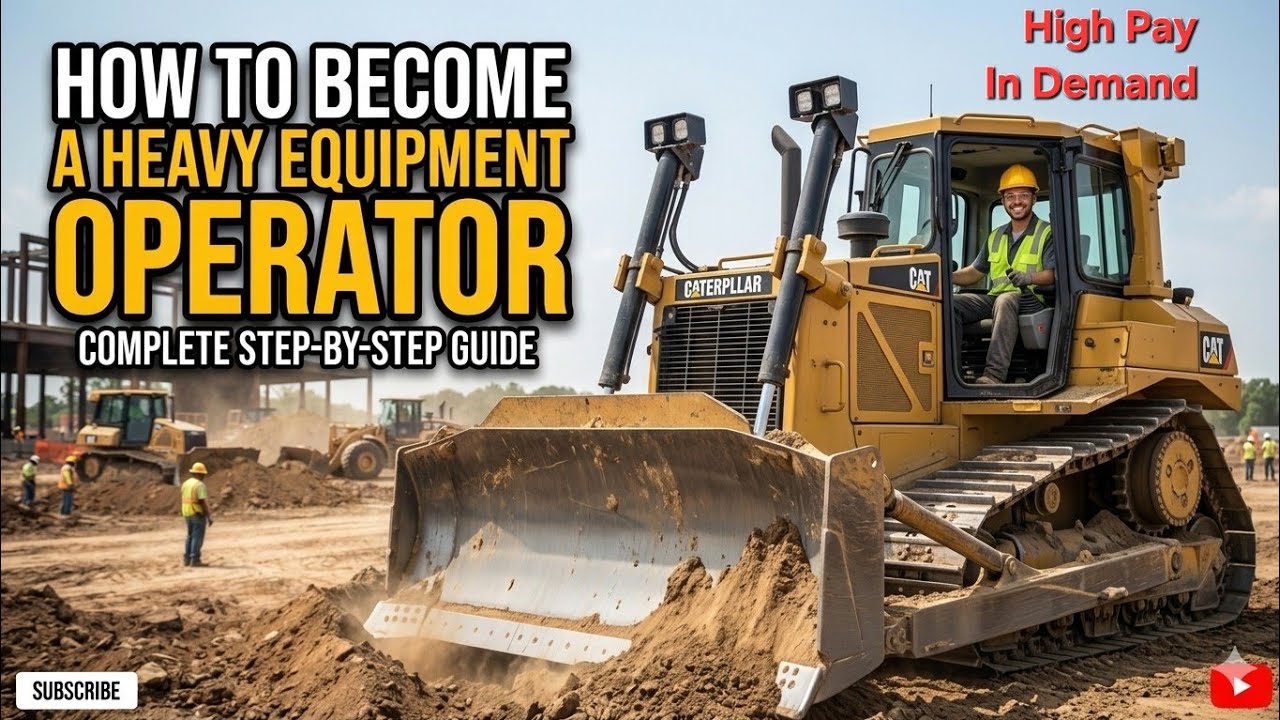
Mastering the Machines: A Step-by-Step Guide to Becoming a Heavy Equipment Operator
This article provides an in-depth exploration of Equipment, covering foundational concepts, practical applications, and engineering insights.
The construction industry is the backbone of modern infrastructure, and at the heart of every major project are the skilled professionals who command the iron giants. If you have ever watched a bulldozer or an excavator in action and wondered how to get behind the controls, you are looking at a rewarding and stable career path. Becoming a heavy equipment operator is a journey that combines technical knowledge, physical coordination, and a commitment to safety.
Understand the Prerequisites
Before you begin your technical training, you must meet a few basic requirements. Most employers and training programs require a high school diploma or an equivalent GED. Additionally, a valid driver’s license is essential, as you will often need to transport yourself to various job sites. Because the role is physically demanding and requires precise movements, maintaining good physical health and sharp hand-eye coordination is a significant advantage.
Choose Your Training Path
There are two primary ways to gain the skills necessary to operate heavy equipment effectively:
- Vocational Schools and Private Training: Many technical colleges offer specialized programs that last anywhere from a few weeks to several months. These programs provide a mix of classroom instruction on safety protocols and hands-on field time where you practice maneuvering the machines.
- Apprenticeships: Organizations like the International Union of Operating Engineers (IUOE) offer apprenticeships that allow you to "earn while you learn." This path combines paid on-the-job training with technical instruction, often lasting three to four years.
Obtain Necessary Certifications
While a general license might get you started, specialized certifications can significantly boost your earning potential. Programs like the National Center for Construction Education and Research (NCCER) offer credentials that prove your competency to employers. Furthermore, if you plan on operating specific machinery like cranes, you may need a Commercial Driver’s License (CDL) or state-specific certifications to stay compliant with local regulations.
Gaining Experience and Specializing
Once you have the baseline training, your focus should shift to gaining as much "seat time" as possible. Most operators start with simpler machines or entry-level labor roles to understand the flow of a construction site. Over time, you can choose to specialize in specific types of equipment, such as backhoes, graders, or tower cranes.
The demand for infrastructure development ensures that those who master heavy equipment will always have a place in the workforce. By following these steps and prioritizing safety, you can build a long-lasting career in the driver’s seat.
Visual Insights & Illustrations


