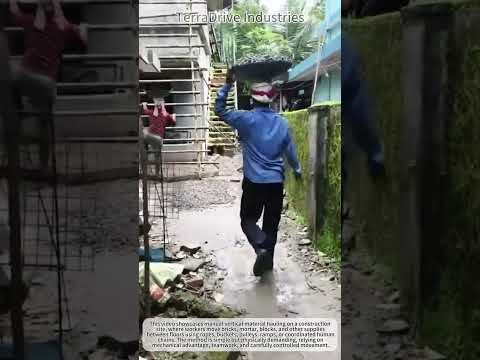
In an era where massive cranes and high-tech machinery dominate the skyline, it is easy to forget that the foundations of the world were built by human hands. While modern technology has certainly accelerated the pace of urban development, there is a fascinating and rigorous world of manual construction that continues to thrive. One of the most impressive displays of this traditional skill is manual vertical hauling—the process of moving heavy building materials upward without the help of automated lifts.
The Human Engine of the Construction Site
Manual vertical hauling is a testament to human coordination and physical endurance. On many sites where space is restricted or budgets are lean, workers form human chains to transport bricks, mortar, and heavy concrete blocks. Instead of relying on expensive machinery, these teams use rhythmic movements and precise timing to pass materials from one level to the next. This method requires not just strength, but a deep understanding of weight distribution and balance to ensure safety and efficiency.
Precision Over Power
While it might seem slower than using a motorized hoist, manual hauling offers a level of localized precision that heavy machinery often lacks. Workers can navigate tight scaffolding and narrow corridors where a crane simply cannot reach. By moving materials like mortar and blocks by hand, the crew maintains constant quality control, ensuring that supplies are delivered exactly where they are needed at the moment the masons require them. This "just-in-time" delivery system keeps the workflow steady and minimizes the risk of material damage.
The Resilience of Traditional Methods
The sight of workers manually hauling materials serves as a powerful reminder of the resilience inherent in the building trades. It highlights the incredible physical demand placed on construction laborers who build our homes and infrastructure. Even as the industry moves toward further automation, the fundamental skills of manual lifting and vertical transport remain a vital part of the global construction landscape.
Understanding these manual processes gives us a greater appreciation for the architecture surrounding us. It proves that while tools and technology evolve, the core of construction will always be rooted in human grit and ingenuity.


