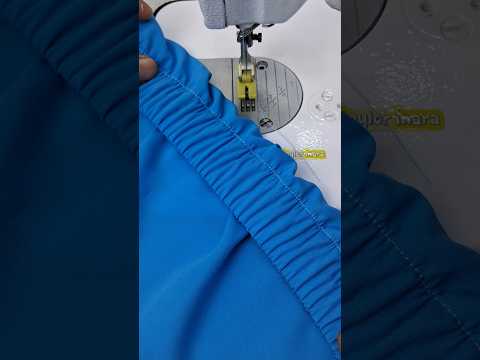
Achieving a professional finish when working with elastic is often the "make or break" moment for any garment project. Whether you are working on a waistband, cuffs, or intricate sportswear, getting that perfect, even stretch can be challenging. However, with the right technique and a basic understanding of your equipment, you can produce results that look like they came straight off a high-end production line.
Why Technique Matters for Elastic Success
Many beginners struggle with elastic because it tends to bunch up or slip during the sewing process. If the tension isn't just right, the fabric may pucker unevenly, or the elastic might lose its recovery properties. To avoid these common pitfalls, the secret lies in a method that is both fast and efficient. By focusing on a "neat and dense" stitch pattern, you ensure that the elastic stays securely in place while maintaining its necessary flexibility.
The Role of High-Quality Sewing Machinery
While manual skill is essential, the precision of your sewing machinery plays a vital role in the final output. Modern sewing machines are designed to handle various fabric thicknesses, but elastic requires a specific touch. To get those "neat and dense" results mentioned in our tutorial, you need to ensure your machinery is set to the correct zigzag or stretch stitch setting. This allows the thread to move with the elastic, preventing the stitches from snapping when the garment is worn.
Step-by-Step for a Flawless Finish
To achieve the best results, start by marking your elastic and fabric into four equal quadrants. This ensures even distribution and prevents one side from being tighter than the other. As you sew, gently stretch the elastic to match the fabric length, but be careful not to pull the fabric itself.
The goal is to create a seamless bond where the elastic feels integrated into the garment rather than just attached to it. When your machinery is maintained well and oiled regularly, the needle will glide through the elastic fibers without snagging, resulting in a professional, store-bought appearance.
Final Thoughts
Sewing elastic doesn't have to be a slow or frustrating process. By utilizing this easy and fast method, you can upgrade the quality of your handmade clothes significantly. Remember, the combination of a steady hand and well-calibrated equipment is the key to mastering any textile challenge. Happy sewing!


