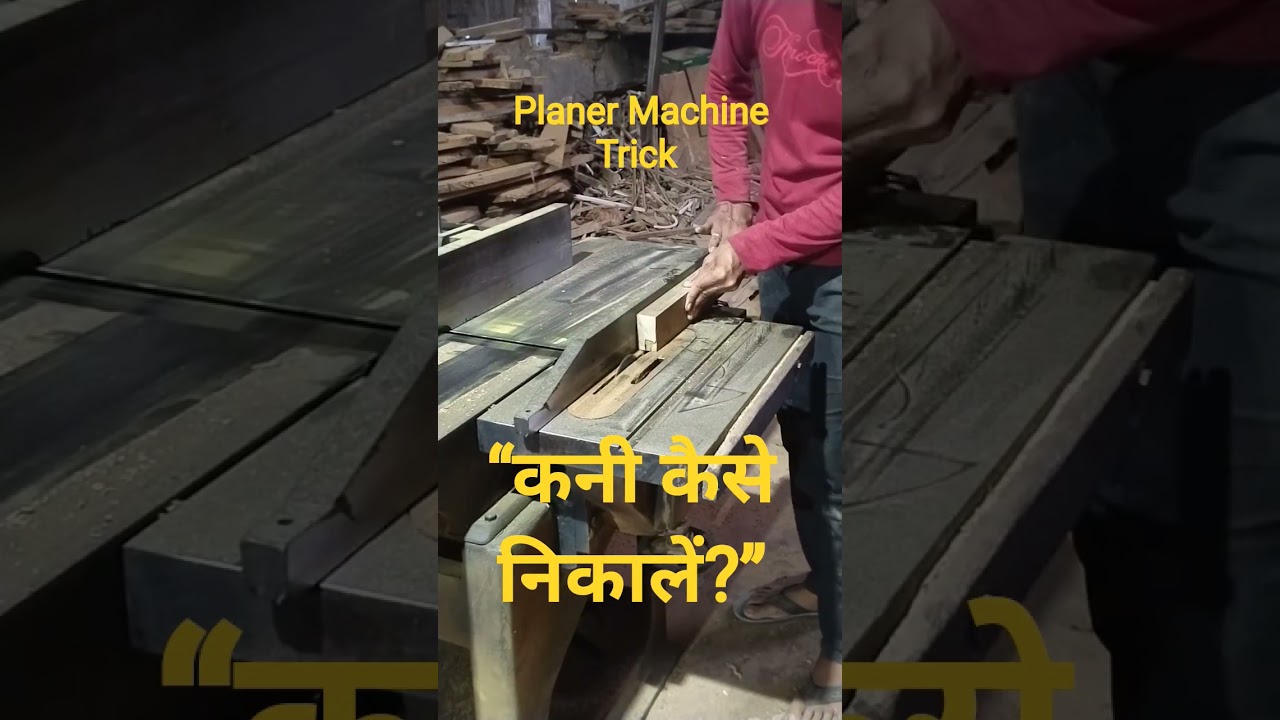
Master Edge Cutting on Planer Machinery: Essential Tips for Carpenters
This article provides an in-depth exploration of Machinery, covering foundational concepts, practical applications, and engineering insights.
In the world of professional carpentry and woodworking, achieving clean, precise edges on timber is essential for creating high-quality furniture and seamless structural joints. While traditional hand tools offer control, modern woodworking machinery has made precision crafting faster, smoother, and far more efficient for craftsmen of all skill levels.
One of the most valuable techniques for any woodworker is learning how to execute precise edge cutting (commonly known as removing the "kani" or edge trimming) using a planer machine cutter. In this guide, we will explore how to perform this essential task cleanly and safely.
Understanding Edge Cutting on a Planer Machine
Edge cutting on a planer machine involves shaping, beveling, or trimming the sides of a wooden board using the machine’s high-speed rotary cutter blades. This process is commonly used to square up rough lumber, create smooth reference edges, or prepare wood stock for edge-to-edge glue-ups.
Using a planer cutter effectively saves significant time compared to manual hand-planing, provided the cutter blades are sharp and aligned correctly.
Step-by-Step Technique for Clean Trimming
To achieve a flawless, smooth finish without splintering or tear-out, follow these essential operational steps:
- Align the Fence Accurately: Ensure your planer fence is set at a strict 90-degree angle (or your desired custom bevel angle) relative to the cutter head. Proper alignment prevents uneven edges along the board.
- Set Shallow Depth Passes: Take light, incremental passes rather than trying to remove too much material in a single pass. Overloading the cutter can leave burn marks or damage the wood grain.
- Maintain Steady Pressure: Keep consistent downward and forward pressure on the workpiece as it glides across the cutter bed to prevent snipe and chatter marks.
Safety Precautions in the Workshop
When operating heavy workshop machinery, safety should always be your top priority. Always inspect the machine to ensure the cutter blades are securely locked into place before turning on the power. Always wear safety goggles and ear protection, and use push sticks or push blocks to keep your hands at a safe distance from the rotating cutterhead.
Final Thoughts
Mastering edge trimming on a planer machine significantly improves the quality and speed of your woodworking projects. By focusing on correct tool setup, safe handling, and proper machinery operation, you can elevate your carpentry skills and produce professional-grade work every time.
Visual Insights & Illustrations


