Have you ever driven down a freshly paved highway and marveled at how perfectly straight the white and yellow lines are? It seems like a task that would require high-tech lasers and satellite-guided computers. However, sometimes the most effective solutions in the world of industrial machinery are the simplest ones.
A viral technique has recently surfaced, showcasing how road workers achieve that satisfying, razor-straight finish without the need for overly complex digital systems. It all comes down to a clever use of physics and a steady hand.
The Genius of the L-Shaped Guide
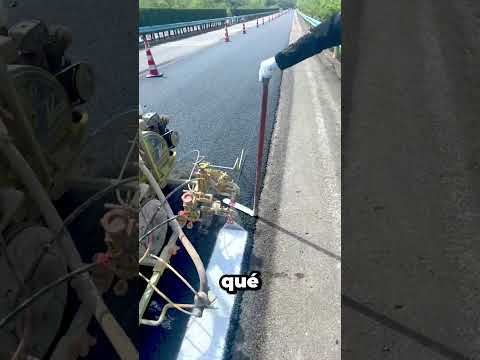
The secret behind these flawless lines isn’t just the quality of the paint; it’s an ingenious, low-tech attachment. In the video, the operator utilizes a specialized L-shaped guide extending from the side of the marking equipment.
By resting this guide against the existing edge of the asphalt, the worker creates a physical "anchor" point. As the road marking machinery moves forward, the guide follows the natural contour of the road’s edge. This eliminates the "human error" of shaky steering, ensuring that the paint is applied at a perfectly consistent distance from the shoulder of the road.
Why Simple Solutions Often Win
In the construction and maintenance industry, reliability is king. While many modern pieces of machinery are being outfitted with GPS and automated steering, these systems can be expensive to maintain and prone to glitches in the field.
The L-shaped guide method is brilliant because it is: * Cost-Effective: It requires no electronics or software updates. * Instant Feedback: The operator can feel the guide against the asphalt, allowing for real-time adjustments. * Universal: This "hack" can be adapted to various types of manual or semi-automatic marking machines.
The Intersection of Skill and Equipment
While the tool itself is simple, it still requires a skilled operator to maintain the right pace and pressure. This technique highlights the perfect synergy between human intuition and mechanical utility. By using the edge of the road as a natural ruler, workers can transform a difficult, high-stakes task into a repetitive, high-quality process.
Next time you see a perfectly striped road, remember that it might not be a multi-million dollar robot doing the work—it might just be a clever worker with a simple metal guide and a reliable piece of equipment.


