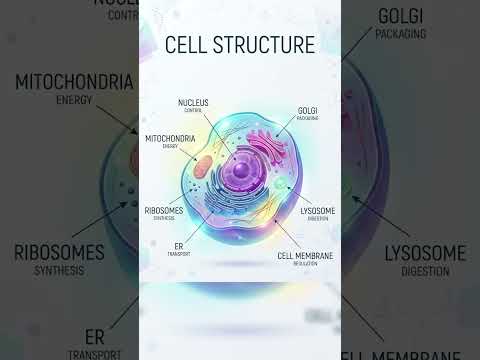
Have you ever wondered what keeps every living organism functioning at its core? The answer lies within the microscopic world of the cell. Cells are the fundamental building blocks of all living organisms, acting as miniature biological factories where essential life processes happen every second. From simple single-celled bacteria to complex organisms like human beings, understanding cell structure gives us a fascinating glimpse into how life operates.
The Foundation of Cellular Life
At the heart of cell biology is the cell membrane, a semi-permeable barrier that regulates what enters and exits the cell. Inside this boundary lies the cytoplasm, a gel-like matrix housing various specialized structures called organelles.
The nucleus serves as the cellular command center, storing DNA and directing vital activities like growth, metabolism, and protein synthesis. Nearby, mitochondria act as cellular powerhouses, converting nutrients into usable energy (ATP) to keep the organism alive. Meanwhile, ribosomes work endlessly to assemble proteins based on genetic instructions.
The Crucial Function of the Golgi Apparatus
While proteins are created by ribosomes, they still need to be properly processed, folded, and directed to their correct destinations. This is where the Golgi apparatus comes into play.
Operating as the cell’s ultimate packaging and shipping center, the Golgi apparatus receives newly synthesized proteins and lipids from the endoplasmic reticulum. It modifies these molecules, tags them with chemical signals, and packages them into vesicles for transport.
These vesicles then carry the finished products to specific sites inside the cell or export them through the membrane. Without this sophisticated biological apparatus, cells would be unable to deliver essential enzymes and hormones, leading to a breakdown in cellular communication and function.
Why Understanding Cell Functions Matters
Exploring how cellular components interact is far more than an academic exercise—it is crucial for modern healthcare and scientific breakthroughs. By studying how organelles function together, researchers can pinpoint the root causes of complex diseases, understand cancer progression, and design targeted drug therapies. Though invisible to the naked eye, the intricate machinery inside our cells makes all biological life possible.


