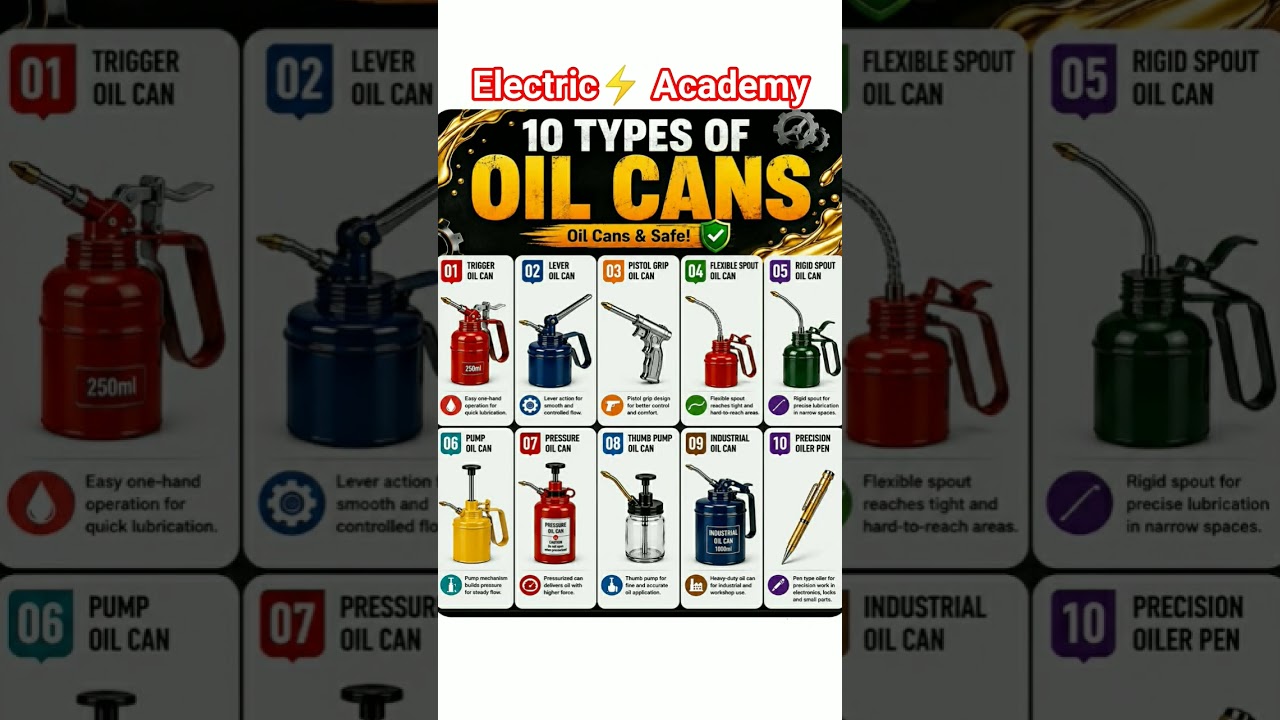
Essential Industrial Tools: 10 Types of Oil Cans Every Mechanic Needs
This article provides an in-depth exploration of Industrial tools, covering foundational concepts, practical applications, and engineering insights.
When it comes to maintaining machinery and extending the lifespan of workshop equipment, proper lubrication is paramount. Among the wide array of industrial tools available today, the humble oil can remains one of the most reliable and indispensable items in any mechanic’s arsenal. Whether you work in a heavy manufacturing plant or a small automotive garage, understanding the different types of oil cans can drastically improve your workflow, cleanliness, and maintenance precision.
Why Oil Cans Are Essential Workshop Tools
Friction is the ultimate enemy of mechanical efficiency. Without adequate lubrication, gears, bearings, and moving parts wear down rapidly, leading to costly equipment failure and unexpected downtime. Utilizing high-quality industrial tools designed specifically for fluid delivery ensures that oil reaches even the tightest, most hard-to-access components. Modern oil cans are engineered to give operators complete control over fluid pressure, prevent messy spills, and deliver precise amounts of lubricant right where it is needed.
Key Types of Oil Cans Explained
Different mechanical tasks require distinct oil delivery methods. Here is a breakdown of the essential oil can designs every technician should know:
- Pistol Grip Oil Cans: Feature an ergonomic trigger mechanism that allows for convenient one-handed operation and precise control over fluid dispensation.
- Flexible Spout Oilers: Ideal for maneuvering around tight engine bends and reaching recessed machinery parts without causing drips.
- Rigid Spout Cans: Built for direct, straight-line application where physical stability and durability are essential.
- High-Pressure Pump Cans: Specifically engineered to force heavy-viscosity oils into tight tolerances or pressurized fittings.
- Precision Needle Oilers: Designed for delicate equipment, small machinery, and tiny pivot points that demand pinpoint accuracy.
Optimizing Your Maintenance Routine
Equipping your workshop with the proper industrial tools guarantees safer, cleaner, and more efficient operations. By selecting the right spout style, pump mechanism, and pressure output for your specific machinery, you can simplify routine lubrication duties and ensure your equipment operates smoothly for years to come.


